


20 FF Rooster
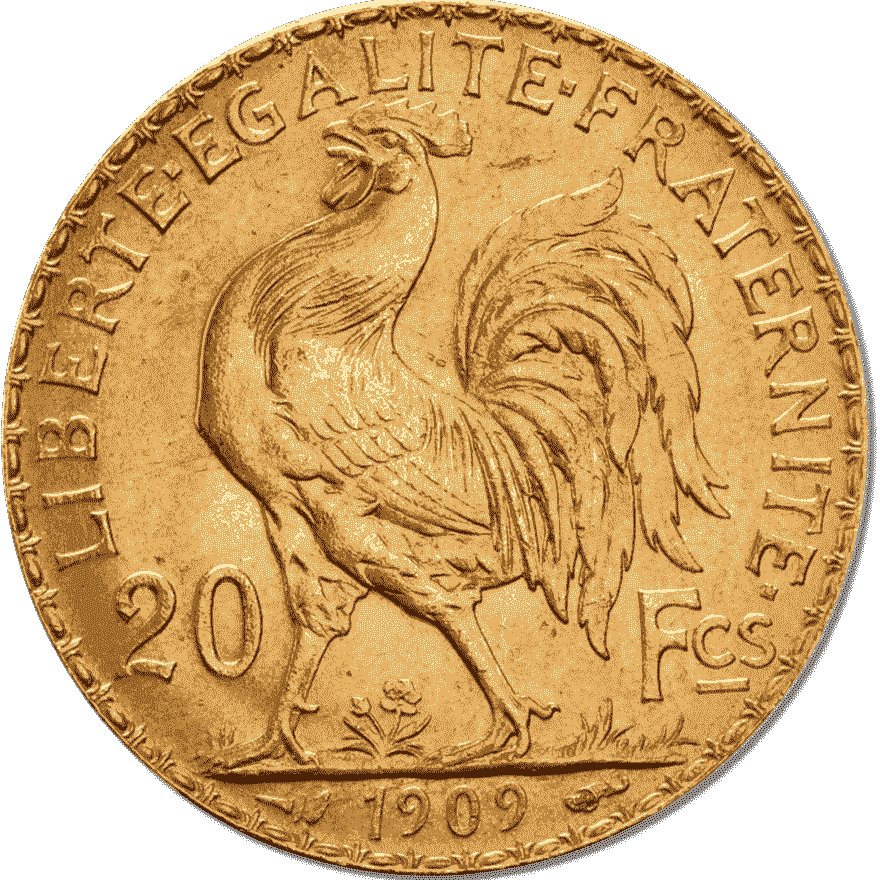
20 FF Rooster
First introduced in 1899, with Marianne, the symbol of Liberty, on the obverse and the rooster on the reverse.
- Gold Content: 0.1867 oz
- Minimum Gross Weight: 6.4516 g
- Purity: 21.6 ct
From £647.03
| Qty | Unit Price |
|---|---|
| 1 – 10 | £647.03 |
| 11 – 19 | £645.74 |
| 20 – 49 | £644.44 |
| 50 – 99 | £643.15 |
| 100 – 249 | £641.85 |
| 250 + | £640.56 |
In stock
About 20 FF Rooster
Among the smaller-denomination gold coins available to UK buyers, the 20 French Francs “Rooster” holds a distinctive place. First introduced in 1899, it pairs Marianne — the enduring symbol of French Liberty — on the obverse with the rooster, one of France’s oldest national emblems, on the reverse. For investors and collectors alike, coins like this one offer something increasingly rare: a tangible link to a specific moment in European monetary history, combined with the practical qualities that make gold coins a mainstay of precious metals portfolios.
This page sets out exactly what is known about the coin, why coins of this type appeal to gold investors, and the practical considerations worth thinking through before adding one to your holdings.
Product Overview
The 20 French Francs coin takes its everyday name, “the Rooster”, from the design on its reverse. It was first struck in 1899, during a period when several European nations were producing gold coinage to broadly similar weight and purity standards, making coins like this one relatively interchangeable with their counterparts elsewhere on the continent in terms of gold value. The obverse carries Marianne, the personification of the French Republic and one of the most widely recognised figures in French civic imagery.
The 20 Franc denomination itself has a longer history than this particular design. It has its roots in changes made to French currency in the late 18th century, replacing the old copper Livre, and the gold version was first introduced in 1803, originally depicting Emperor Napoleon Bonaparte — which is why coins of this denomination became widely known as “Napoleons” (or “Louis” among royalists) from 1815 onwards. Over the following century the design changed hands several times, including versions featuring the cockerel and the “Value in Wreath” motif, before production of French gold and silver coinage was discontinued in the aftermath of the First World War. The Marianne and rooster version struck from 1899, featured on this listing, is one of the most popular of these historic designs among collectors.
Why Investors Choose This Coin
Investors are typically drawn to coins like the 20 French Francs Rooster for two related reasons. First, its smaller gold content makes it a flexible building block — useful for those who want to add to, or draw down, a gold holding gradually rather than in single, larger units. Second, as a coin with a genuine place in European monetary history, it appeals to buyers who value the story and provenance behind a holding, not just its metal content.
It’s worth being clear-eyed about what this coin is not: it is not a UK legal tender coin, and it should be evaluated on its own terms rather than assumed to carry the same characteristics as a Sovereign or Britannia (see Investment Considerations below).
Benefits of Physical Gold Ownership
Gold Investments’ own guidance on investing in gold sets out why physical ownership appeals to many buyers. Gold has historically held its value well against inflation — buy with today’s currency, and if you later sell, you’re transacting in tomorrow’s currency, which can help offset the effects of currency devaluation over time. Gold also tends to retain demand even during periods of broader economic uncertainty, which is part of why many investors treat it as a stabilising element within a wider portfolio.
There is also a straightforward, practical appeal to physical ownership: unlike a shareholding or a digital asset, a gold coin is something you can hold, store, and access directly, independent of any single financial institution.
Portfolio Diversification
Physical gold coins such as this one are typically held as what’s known as allocated gold — meaning the metal is directly and specifically owned by the investor, rather than represented indirectly through a bank’s reserves (unallocated gold) or a fund. For investors building a diversified portfolio, a smaller-denomination historic coin can sit alongside larger bullion coins from our Buy Gold Coins range, or gold bars, offering more flexibility when it comes to buying or realising smaller amounts of gold without needing to transact in a single larger unit.
Investment Considerations
Purity, weight and gold content
At 21.6 carat purity with 0.1867 oz of gold content per coin, the 20 French Francs Rooster sits below one troy ounce, which is worth bearing in mind when comparing it to larger bullion coins on a pure gold-content basis.
Tax treatment of foreign gold coins
All gold coins sold in the UK are exempt from VAT. However, Capital Gains Tax exemption in the UK is generally reserved for coins that hold UK legal tender status, such as the Sovereign and Britannia. As a French-minted coin, the 20 French Francs Rooster does not carry this status, so different Capital Gains Tax considerations may apply to any gain realised on sale. Tax rules and thresholds can change, so this is worth discussing with a qualified tax adviser, or with our team, ahead of any purchase intended primarily for investment.
Who This Coin May Suit
This coin tends to appeal to two types of buyer: investors who want to diversify a bullion holding with a smaller-denomination, historically interesting coin, and collectors drawn to its design and place in European coinage. It may be less suited to buyers whose primary objective is UK Capital Gains Tax exemption, given the considerations outlined above.
Long-Term Ownership Considerations
As with any physical gold holding, long-term ownership comes with a few practical questions worth settling upfront: where the coin will be stored, how its authenticity will be maintained over time, and how straightforward it will be to sell when the time comes. Addressing these early tends to make for a more comfortable ownership experience than treating them as an afterthought.
Storage Considerations
Gold Investments offers secure storage for gold coins at the London Silver Vaults, with metal held on the client’s behalf, fully insured, and independently audited. This is one option worth considering if you would prefer not to store the coin at home. Full details are available on our Gold Storage page.
Why Recognised Bullion Coins Remain Popular Among Investors
Recognised gold coins — whether globally ubiquitous bullion issues like the Krugerrand or historic denominations like the 20 French Francs — remain popular because they combine a standardised, verifiable gold content with genuine liquidity: they can be bought, sold, or valued with reasonable ease, wherever gold is traded. For coins with a longer history, that recognisability is paired with a design and story that many investors and collectors simply find more engaging than a purely modern bullion product.
Related Products Worth Considering
If you’re weighing this coin up against other options, it may help to also look at: the standard 20 French Francs listing (the same coin type in mixed dates — please check current stock status), the Sovereign and the 1 oz Britannia (both UK legal tender and CGT-exempt), or the 1 oz Krugerrand as a widely recognised full-ounce benchmark. You can also browse the full Buy Gold Coins range, or compare against our Buy Gold Bars category if you’re deciding between coins and bars.
If you’d like to know more about this coin, how it might fit into your portfolio, or how to arrange secure storage, our team is happy to talk it through. You can also sell this exact coin back to us when the time comes.
Ready to find out more? Call us on 020 7283 7752 or email [email protected].